

Celebrating Fellows Dana Carriere and Joel Frey
Celebrating EDI and Indigenization Faculty Fellows from Edwards School of Business and Engineering
By Gwenna Moss Centre for Teaching and LearningDuring 2024-2026, USask’s EDI and Indigenization Faculty Fellows explored how Equity, Diversity, and Inclusion (EDI), Indigenization, and Open Educational Practices can be meaningfully woven into teaching, learning, and academic community life.
Through regular conversations, shared reflection, and mutual support, the Equity, Diversity, and Inclusion (EDI), and Indigenization Fellows formed a close-knit community of practice committed to creating more inclusive, culturally responsive, and accessible learning environments for students and colleagues alike. Their work has been both deeply personal and profoundly collaborative, inviting critical reflection on positionality, belonging, and the responsibilities of educators within a diverse university community. As the Fellowship concludes, the resources, course innovations, and reflections they shared demonstrate the many ways faculty can advance these commitments in their own contexts while supporting others to do the same.

Dana Carriere, MBA, is a member of Peter Ballantyne Cree Nation and a proud Swampy Cree/Métis educator whose work is grounded in Indigenous ways of knowing, relationship-building, and a commitment to advancing truth, reconciliation, and Indigenous prosperity. As Director of Indigenous Business Education and Engagement at the Edwards School of Business, she leads initiatives that support Indigenous student success, community engagement, curriculum development, and the integration of Indigenous perspectives across business education. Drawing on her BA, MA, and MBA from USask, Carriere plays a significant leadership role in Indigenous engagement and EDI strategies, advocating for more inclusive and equitable practices in both post-secondary institutions and workplaces. As an educator, she is committed to fostering cultural competence, humility, and meaningful connections between Indigenous and non-Indigenous peoples, while helping students understand the importance of Indigenous business, leadership, and economic reconciliation. Carriere designed and delivered COMM 347: Indigenous Business in Canada, a required course for undergraduate business students that prepares future leaders to engage thoughtfully with Indigenous communities and economies. Her work reflects a belief that education should be transformative, relationship-centred, and community-driven, creating opportunities for learners to contribute to a more inclusive and equitable future. Through her leadership, teaching, and mentorship, she continues to inspire students and colleagues to advance reconciliation through action, learning, and respectful engagement.
Carriere’s Fellowship artifacts reflect her belief that inclusive learning environments are built with students rather than for them. Through the creation of a student-generated “Class Code of Conduct,” she invited learners to collectively define the values, behaviours, and responsibilities that would shape their classroom community, particularly within an Indigenous-focused course that required students to confront difficult histories, challenge assumptions, and engage with different ways of knowing. As she stated, “Creating a safe and caring learning environment is key to supporting all students on their learning journey, no matter where they are on that journey.” This activity demonstrates her commitment to respect, relationality, accountability, and shared learning, while empowering students to take ownership of the classroom culture through guided discussion. The artifact is not only a suggested guide for students in creating a code, it also provides examples of student-generated responses. The ‘Code,’ centres on active listening, open-mindedness, inclusivity, and ethical engagement, and reflects Carriere’s conviction that meaningful learning, decolonization, and reconciliation are most effective when grounded in trust, community, and mutual respect.
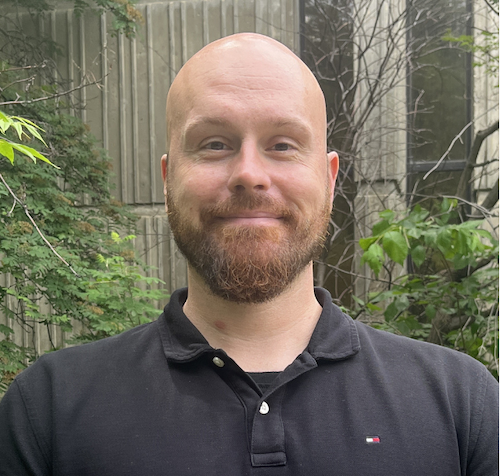
Dr. Joel Frey (PhD), P.Eng., Associate Professor with the College of Engineering, continues to play a key role in the ongoing redesign of various courses in the undergraduate program. As a key architect of the college’s innovative RE-ENGINEERED first-year program, his work has helped reshape engineering education through a focus on connection, accessibility, inclusion, and student growth. He is also a leader in advancing Indigenization within engineering education, helping develop a first-year Indigenous Cultural Contextualization of Engineering module that encourages students to engage with reconciliation, Indigenous worldviews, and the responsibilities of engineers in society. During his time in the EDI and Indigenization Fellowship, Frey focused on illuminating how reciprocal relationships are at the root of the discipline of engineering and how professionalism, ethics and law impact these relationships. Frey maintains a passion for creating spaces for students to feel a sense of belonging, purposely integrating opportunities to support student collaboration and community building. He highlighted how, “I have found that a deeper understanding of the group dynamics at play in any project team leads to much more successful outcomes. It’s my hope that introducing students early in their career to these understandings will give them a jumpstart on successful futures in engineering.”
Throughout the duration of the EDI and Indigenization Fellowship, Frey completed a reconfiguration of his course, which is featured in his Fellowship artifacts and reflections. This reorganization was carried out in the course General Engineering 449.3 – Engineering in Society by dividing the course into two modules with learning outcomes that invited students to reflect on how professionalism, ethics and laws affect the practice as well the broader impacts of their roles as engineers in society. He further sub-divided the second outcome to address key elements of EDI and Indigenization work specific to the profession of engineering. Frey opted to allow students choice in a large project during the course to make sometimes uncomfortable and complex topics accessible. In this artifact and reflection, he also highlighted two additional assignments that further engaged students while also modeling the importance of collaboration, inclusion, and reflection within the profession of engineering. Frey’s course reconfiguration highlighted how EDI and Indigenization work is not only relevant to the profession; but it can also further enhance the field of engineering in society.
Engage with these EDI and Indigenization artifacts and reflections in HARVEST
Dana Carriere - Fellowship artifacts and reflections
Joel Frey - Fellowship artifacts and reflections
Title image credit: USask | Flickr
This article was created with the assistance of AI tools, as described in the GMCTL AI Disclosure Statement.