

Celebrating Fellows Brad Congdon and Carly Priebe
Celebrating EDI and Indigenization Faculty Fellows from Arts and Science and Kinesiology
By Gwenna Moss Centre for Teaching and LearningDuring 2024-2026, USask’s EDI and Indigenization Faculty Fellows explored how Equity, Diversity, and Inclusion (EDI), Indigenization, and Open Educational Practices can be meaningfully woven into teaching, learning, and academic community life.
Through regular conversations, shared reflection, and mutual support, the Equity, Diversity, and Inclusion (EDI), and Indigenization Fellows formed a close-knit community of practice committed to creating more inclusive, culturally responsive, and accessible learning environments for students and colleagues alike. Their work has been both deeply personal and profoundly collaborative, inviting critical reflection on positionality, belonging, and the responsibilities of educators within a diverse university community. As the Fellowship concludes, the resources, course innovations, and reflections they shared demonstrate the many ways faculty can advance these commitments in their own contexts while supporting others to do the same.
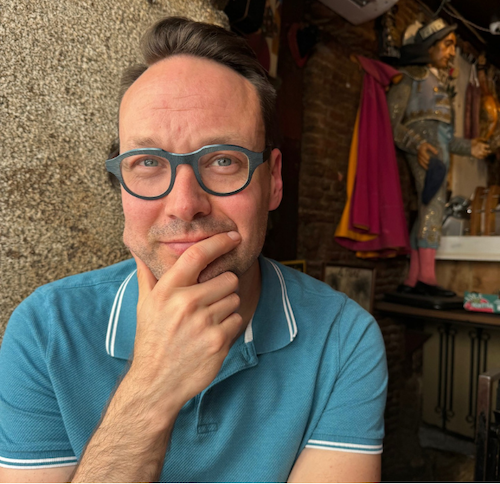
Dr. Brad Congdon (PhD), is an educator and scholar at USask whose teaching is distinguished by a deep commitment to student engagement, critical inquiry, and inclusive learning. Drawing on research interests that span literature, gender studies, masculinities, popular culture, and film, he encourages students to examine how stories, identities, and power shape human experience and social understanding. Colleagues and students alike recognize his carefully designed courses, thoughtful feedback, and ability to foster meaningful classroom discussion, helping students connect academic learning to broader cultural and social questions. His teaching excellence has been formally recognized at both Dalhousie University and USask. Students describe him as approachable, engaging, and genuinely invested in their success, qualities that reflect his belief that effective teaching is built on intellectual curiosity, mutual respect, and strong relationships. Congdon's pedagogical approaches foster student collaboration, incorporating activities that require students to work together to create knowledge rather than simply consume it. Through his teaching and mentorship, Congdon creates learning environments where students are challenged to think critically while feeling supported as learners and individuals.
Congdon’s Fellowship artifacts and reflections demonstrate his commitment to making equity, Indigenization, accessibility, and student engagement intentional and visible components of curriculum design. Using Course Inventory rubrics from GMCTL, he looked at how course syllabi foster belonging, represent diverse perspectives, incorporate Indigenous knowledges, and support accessibility. His collaborative terminology documents further reflect a belief that students learn best when they construct knowledge together, contribute to shared class resources, and have opportunities to shape their own learning and assessment. Underlying these artifacts is an important pedagogical question that guides his work: How do we design courses that support diverse learners while maintaining academic rigor and encouraging genuine participation? By emphasizing collaboration, student choice, scaffolding, and inclusive course design, Congdon models a thoughtful approach to teaching that seeks to reduce barriers and create learning communities in which all students can succeed.

Dr. Carly Priebe (PhD), Lecturer with the College of Kinesiology, demonstrates her dedication to advocating for inclusion within the many kinesiology courses she instructs. A graduate of the College of Kinesiology herself with a background in coaching and mentorship, Priebe’s passion for inclusive education inspires those around her, both students and faculty, to engage in mutually respectful relationships within our communities. Colleagues and students have recognized her innovative and student-centred approach through numerous honours at the institutional and provincial level. Throughout the EDI and Indigenization Fellowship, Priebe led the development of supports and resources for working more effectively with diverse groups of people. She describes her passion for this work as a commitment to supporting people who are often overlooked, to say, “I see you.” Priebe’s compassion, empathy, and dedication to foster diverse and equitable learning communities is reflected in her belief that student voice is an essential component of learning across her courses, she continually amplifies diverse voices and encourages students to work within the community to build relationships rooted in reciprocity.
Priebe has incorporated a variety of learning opportunities for her students across multiple kinesiology classes. In her Fellowship artifacts and reflections, she highlights six examples of activities and assessments which invited students to consider how accessibility, reconciliation, and reflection are being addressed in the kinesiology discipline. Priebe also considered how to make her classroom more equitable by giving students multiple opportunities and formats to demonstrate their course's learning outcomes. Throughout her reflection, she continually highlighted how beneficial it is to engage with community as often as possible and how relationships are an essential part of this work. She modelled how EDI and Indigenization work is a collaborative effort and how reflection continues to empower students to create meaningful changes in their respective fields. Priebe articulated how there is not one answer for integrating EDI and Indigenization into teaching and learning; instead, it can be an ongoing and community-oriented process that empowers and engages students where they are at.
Engage with these EDI and Indigenization artifacts and reflections in HARVEST
Brad Congdon - Fellowship artifacts and reflections
Carly Priebe - Fellowship artifacts and reflections
Title image credit: USask | Flickr
This article was created with the assistance of AI tools, as described in the GMCTL AI Disclosure Statement.