

USask Sustainability Fellowship Profile: Andrew Ireson
Sustainability and connection - Dr. Andrew Ireson, Acting Assistant Director Academic (Internal) and Professor, School of Environment and Sustainability
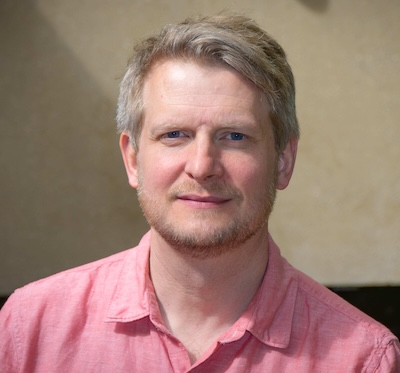
Reflection, Empathy, and Connection in Sustainability Education: Andrew Ireson’s Fellowship Journey
For Dr. Andrew Ireson, sustainability has always been central to his academic work, but participating in the Sustainability Faculty Fellowship helped him see that teaching sustainability is about more than content, it is about connection.
Ireson has been an instructor in the School of Environment and Sustainability (SENS) for the past fifteen years teaching courses in environmental modeling, field methods, and data analysis. In a discipline inherently rooted in sustainability, the concepts were already present in his teaching. Yet the fellowship offered something different: an opportunity to rethink how those concepts are delivered and how students experience learning.
“It changed my approach to the way I deal with students in the classroom,” Ireson stated. He went on to explain, “Instead of focusing on getting technical details out and downloading them into the heads of students, I’m learning to be more empathetic towards where individual students are at.”
That shift, from emphasizing technical content to emphasizing student connection, became one of the most meaningful outcomes of his fellowship experience.
From technical expertise to student-centered teaching
When Ireson began the fellowship, he expected the focus would be largely on sustainability concepts and perhaps on research. Instead, he found the experience to be grounded in teaching practice, particularly in exploring what it means to be for educational to be student-centered.
“At first, the idea of student-centered teaching sounded a bit strange,” he said. “All teaching should be student-centered.” However, through conversations with the fellowship cohort and with educational developers at the Gwenna Moss Centre for Teaching and Learning, he began to reflect on how his instruction had evolved over time.
“When you’re early in your career, you’re very focused on the technical quality of what you’re teaching,” he said. “But as you gain experience, you realize it’s not just about what you say, it’s how you say it, and how you engage with students.” That realization prompted a shift in his classroom approach: making space for conversations about students’ experiences, connecting course content to their lives, and meeting learners where they are.
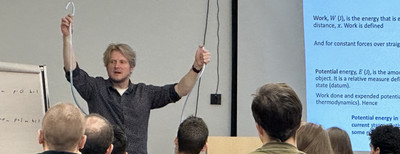
“Every student is on their own journey and has different needs,” he said. He remarked that he has learned about the value of conversations about life, how things are going, and how the content fits in.
Bringing the SDGs to the forefront
Although sustainability was already embedded in the curriculum at the School of Environment and Sustainability, Ireson said that the United Nations Sustainable Development Goals (SDGs) were not something he explicitly incorporated into his courses before the fellowship.
“The SDGs were in the background,” he said. “Everything we do is fundamentally about sustainability, so it wasn’t difficult to connect our content to them. But I hadn’t really sat down and critically thought about what the SDGs are.”
The fellowship created that opportunity to focus on relevance and reflection. With that goal in mind, Ireson began introducing intentional conversations about the SDGs in his courses, particularly in ENVS 813: Introduction to Numerical Modelling for Environmental Engineers and Scientists, to help students see how their technical work relates to broader global sustainability challenges.
“I would deliberately introduce sessions and have discussions about sustainability and careers,” he recalled. “We would talk about the SDGs, what they are, and why we are here doing this work.” These conversations helped students connect classroom learning to real-world impact and to their future professional roles. “I think the students appreciated those discussions,” he said, recalling how engaged students were in these conversations.
The value of reflection
One of the biggest takeaways from the fellowship for Ireson was the opportunity to pause and reflect on his teaching, on his values, and on how sustainability shapes both.
“The fellowship made me think about some ways of approaching my teaching and my career that reflect the values of sustainability,” he said, “values that go beyond things like making money or being successful.” That reflection also helped him recognize the importance of empathy in teaching, not only in understanding students’ learning needs but in considering how education can support students as whole people.
“I approach teaching differently. The connection with students is a lot stronger now,” he said. For Ireson, that change has had a meaningful impact both personally and professionally.
Building community through the fellowship
Beyond the learning itself, Ireson shared that one of the most rewarding aspects of the fellowship was the people.
“It was a very welcoming environment,” he noted, “The people I met were nice, and the conversations were valuable.” He pointed out that these conversations not only offered new perspectives on teaching but also created a network of colleagues committed to sustainability across disciplines. That sense of community became one of the defining features of the experience, something Ireson captures in the three words he uses to describe the fellowship: Reflection. Empathy. Network.
Advice for future fellows
For faculty who are considering applying to the Sustainability Faculty Fellowship, Ireson’s advice is simple.
“The fellowship gives you an opportunity, as long as you are open-minded,” he said. Ireson explained that the experience offers value, not only for those interested in sustainability, but also for faculty interested in rethinking their teaching. It should also be appealing to those who wish to become more engaged in the broader work of their units and the university.
“You’ll meet a lot of nice people and learn a lot from them,” he said, “but you do have to be open-minded, to sit down and think about your teaching and your career through the lens of certain values.”
For Ireson, his personal openness led to meaningful growth in how he teaches, how he connects with students, and how he sees sustainability in higher education. While the technical content remains important, the fellowship reminded him that the most impactful teaching and learning often begins with empathy.
---
Dr. Ireson's fellowship work directly supports the Sustainability Strategy, particularly Commitment 3: Empower Action. For more information on the strategy, please visit the Office of Sustainability’s website.
Visit our page to learn more about the Sustainability Faculty Fellowship, or email Gwenna Moss Centre for Teaching and Learning.
Title image credit: Joey Kyber | Pexels.com
This article was created with the assistance of AI tools, as described in the GMCTL AI Disclosure Statement.